
Ask an audit senior or manager where the hours went on a heavy engagement, and the answer is rarely the hard part. It's the work that has to happen before the hard part can start: confirming the numbers agree, the samples trace, and the file about to be tested is the file that should be tested. None of that work is optional. The real question is who is doing it, and what their hours cost the firm.
Manual Tie-Out and Vouching: Name the Work, Not the Complaint
Every firm knows review runs long. Far fewer can say exactly where the time goes. Break a senior's review hours apart on almost any engagement, and the same five tasks keep turning up:
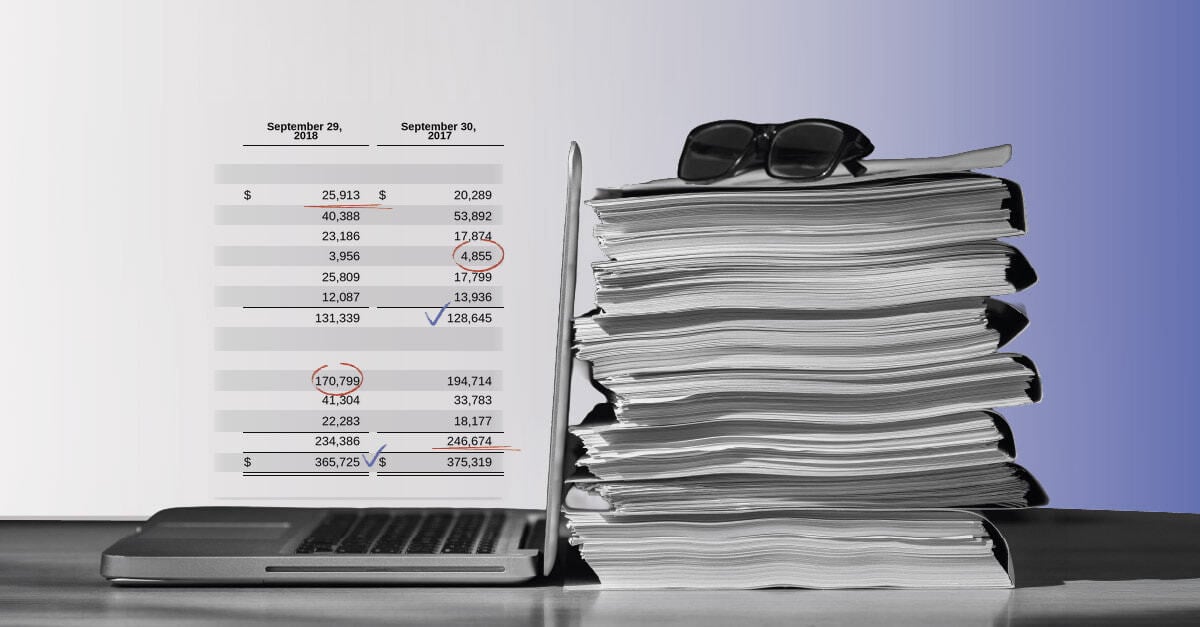
- Tying figures across the financial statements, the trial balance, and the supporting workpapers, so the same number reads the same way everywhere it appears.
- Checking the math on client schedules: footing columns, cross-footing rows, recalculating totals that should already be right.
- Tracing samples back to source documents, one selection at a time, to confirm each item exists and matches what was recorded.
- Comparing this year to last year, looking for balances or line items that changed, or moved to a different place on the statements, without explanation.
- Confirming the version of a document before testing starts, because a schedule that was updated after it was first sent can quietly invalidate everything built on top of it.
Look at that list closely and a pattern shows up. Every item on it is mechanical, rule-based verification. A figure either ties or it doesn't. A column either foots or it doesn't. A sample either traces to the invoice or it doesn't. No professional judgment goes into getting the answer. It still takes time, attention, and care, and at most firms, it's landing on the most expensive person in the room.
Why Tie-Out and Vouching Land on Seniors and Managers
This work doesn't surface where it's created. It surfaces at review.
A staff accountant preps a workpaper. A client sends a revised schedule. Someone rolls forward last year's file. Each step can leave behind a figure that no longer agrees with another one, and nothing flags it when it happens. The inconsistency sits there until the in-charge senior or audit manager opens the file, sometimes hours later, often days later.
At that point, the reviewer owns the problem. They find the figure that doesn't tie, trace it back to where the break happened, and either fix it or send it back. Every upstream inconsistency across the engagement funnels into the same small group of people at the same stage of the process.
The cost of that isn't only the hours. It's which hours. Reveiwer time is the scarcest capacity a firm has, the time it can least afford to spend and can least easily add. When that time goes to confirming a total foots, the firm is spending its most constrained resource on work with little professional judgment in it.
What Manual Tie-Out and Vouching Adds Up To
None of these checks happens once. They run on every schedule, sample, and document, and a single late client revision can send a reviewer back through tie-outs already finished.
The recovery is real, not theoretical. Eide Bailly unlocked more than 4,600 hours of additional annual capacity once this category of manual work was eliminated, on top of the time savings it already had with its prior provider. That figure isn't a projection. It's time a firm got back after it stopped doing this work by hand, and it's a useful reference point for how much time this category of work can hold.
Tie-Out and Vouching Were Never Judgment Calls
Tie-out, vouching, math checks, version comparisons, and prior-year consistency checks all work the same way. Each one compares two things and asks whether they match: a figure against the statement it should appear in, a sample against its invoice, a total against the sum of its rows. There is one correct answer every time, and finding it takes accuracy, not audit judgment.
That distinction matters because it separates two kinds of review that tend to get lumped together. The first kind is the work a reviewer should keep doing: assessing risk, deciding where to dig deeper, weighing evidence, forming conclusions, and applying professional skepticism to what the numbers suggest. That's where experience earns its rate, and it's the work clients and regulators are relying on.
The second kind is verification that only ever became a reviewer’s job because nothing else could do it. For most of the profession's history, the only way to check the math was for a person to do it by hand. The work stayed manual for lack of an alternative, not because it needed a trained reviewer.
That is no longer the case. Automated approaches now exist that can handle this category of rule-based verification, which makes it worth asking whether a firm's most experienced people should still be spending their review hours on it. The judgment work stays with the reviewer. The checking doesn't have to.
Find Out How Many Hours This Work Costs Your Firm
Most firms have never run the number on how many hours this work consumes. That isn't an oversight. It's a structural blind spot. Tie-out, vouching, and version-checking don't show up as their own line in time reporting. They're scattered across review time, logged under the engagement and the review phase, and never broken out as a category anyone tracks on its own.
The result is a cost that's large, recurring, and almost entirely unmeasured. It's hard to decide how much to invest in fixing a problem when no one knows how big the problem is. Before deciding anything about how to address it, the first step is to size it against your own engagement volume and staffing.
See how big this is for you by running your firm's numbers in the Cost of Rework calculator.